
Financial Planning in Boca Raton
Fee-only fiduciary advisors serving South Florida. Your investment, tax, and estate strategy, coordinated for families whose success has created complexity.
Fee-Only
Compensated solely by our clients. No commissions. No conflicts.
Serving Florida Since 1995
Three decades of fee-only fiduciary wealth management.
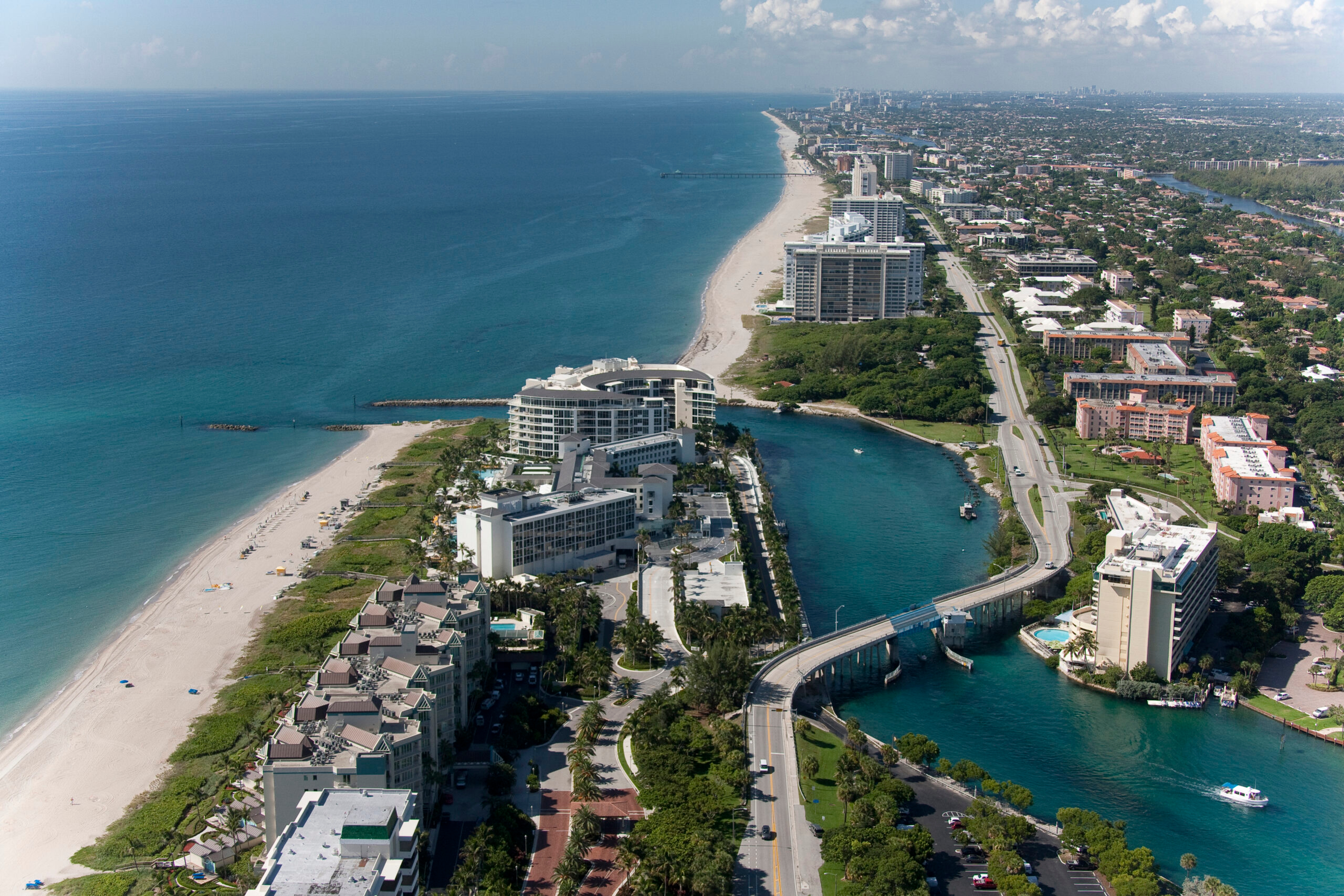
You Moved to Florida for a Reason. Your Plan Should Finish What You Started.
Your investments, tax strategy, and estate plan, coordinated within one framework. View our planning process
The driver's license says Florida. The voter registration says Florida. But your estate plan still says Connecticut. Your deferred compensation distributions are still being taxed by New York. Your homestead exemption was never filed because no one told you about the March 1 deadline.
Families arriving in Palm Beach County from the Northeast often discover that the financial transition is more complex than the physical one. Domicile establishment, estate document restructuring, investment repositioning, account re-registration, and income timing all need to be coordinated within one plan. The savings are real ($30,000 to $300,000+ annually in state income tax), but only if the details are handled correctly. One missed step gives your former state a basis to challenge your departure.
Your Boca Raton FinancialTeam

Brian Sirota, CFP®, ChFC®, MBA
Brian is a Certified Financial Planner® and Chartered Financial Consultant with an MBA and 17 years of planning experience.
Financial Planning Considerations for Palm Beach County Families
Northern Transplant Residency Planning
Establishing Florida domicile to eliminate state income tax of $30,000 to $300,000+ annually. Complete residency transition coordinated with your estate plan, tax strategy, and investment repositioning.
Deferred Compensation Transition Planning
Distributions from prior-employer deferred comp plans must be timed carefully relative to domicile change. Your former state's rules determine whether distributions after relocation are subject to its tax.
Country Club Lifestyle Integration
Annual costs of $100K to $300K+ for premium club memberships (initiation fees of $50K to $250K+, annual dues of $15K to $50K+) are modeled explicitly in your retirement cash flow projections.
Philanthropic Planning
Donor-advised funds, charitable remainder trusts, private foundations, and Qualified Charitable Distributions coordinated with your tax and estate strategy. Jewish Federation of South Palm Beach County, Boca Raton Regional Hospital Foundation, and FAU Foundation are common giving vehicles in this community.
Communities We Serve from Boca Raton
Communities
- Royal Palm Yacht & Country Club
- The Sanctuary
- Le Lac
- Boca West Country Club
- St. Andrews Country Club
- Woodfield Country Club
- Broken Sound
- Polo Club of Boca Raton
- Addison Reserve
- Long Lake Estates
- Boca Bridges
- Lotus Boca Raton
- Stonebridge Golf & Country Club
- Boca Pointe
- Boca del Mar
- Mizner Park area
- Highland Beach
- Delray Beach
- Manalapan
- Town Center area
Common Questions About Financial Planning in Boca Raton
Establishing Florida domicile involves multiple coordinated steps. Obtain a Florida driver's license and surrender your Northern license. Register to vote in Florida and vote in Florida elections. File a Declaration of Domicile with the Palm Beach County Clerk. Apply for Florida homestead exemption before the March 1 deadline. Register vehicles in Florida. Update your address on all financial accounts, insurance policies, and professional licenses. Execute new estate planning documents with a Florida attorney. Join Florida-based organizations (religious, social, professional). Maintain contemporaneous records of your location (calendar, credit card statements, cell phone records, E-ZPass logs). Spend 183+ days per year in Florida with supporting documentation. Your FinancialTeam coordinates the financial dimensions of this transition. State residency rules are complex and fact-specific; consult with your CPA and attorney. Learn more about financial planning
Florida's homestead exemption removes up to $50,722 (2025, CPI-adjusted) from your property's taxable value. The annual filing deadline is March 1. You must own and occupy the property as your primary residence as of January 1. First-time filers apply through the Palm Beach County Property Appraiser. The exemption also activates Save Our Homes (3% annual assessment cap) and portability (transfer up to $500,000 of accumulated SOH benefit to a new Florida home within two years). Missing the March 1 deadline means waiting until the following year. Your FinancialTeam includes this deadline in your relocation timeline.
The answer depends on your former state's rules. Some states tax deferred compensation based on where the services were performed (source-based taxation), regardless of where you live when the payments are received. Others use allocation formulas based on years of service in-state versus total years. Still others may respect your current domicile. For example, New York generally sources nonqualified deferred compensation to the state where services were performed, so relocating to Florida may not eliminate New York tax on those payments. Your FinancialTeam coordinates with your CPA to analyze your specific plan and former state's rules. Tax rules vary by state and plan type.
For families in communities like Boca West, Royal Palm, or St. Andrews, club costs represent a significant and relatively fixed expense. Initiation fees ($50K to $250K+), annual dues ($15K to $50K+), and dining/activity minimums are modeled in your retirement cash flow projections alongside healthcare, property taxes, insurance, and living expenses. These costs are not discretionary for families who have built their social and professional networks around their club community. Your financial plan tests whether your income sources and portfolio can sustain these commitments over a 25 to 30 year horizon. This is a planning consideration, not a recommendation regarding club membership.
Owning a home in your former state does not automatically prevent establishing Florida domicile, but it does create a factor that your former state may examine in an audit. The relevant question is which home is your primary residence and where your closest connections lie. Maintaining a smaller, less furnished New York property used for occasional visits is different from maintaining a fully furnished, comparably sized home where you spend significant time. If you retain a Northern home, documenting that Florida is your primary residence (through time spent, furnishings, mail delivery, healthcare providers, social connections, and financial account addresses) becomes more important. Your FinancialTeam helps evaluate how property ownership affects your domicile position.